Image


Nargess Golshan, an assistant professor of accounting at Indiana University’s Kelley School of Business who holds a PhD from Trulaske’s School of Accountancy, recently used AI to analyze mental health in the C-suite.
The School of Accountancy at the University of Missouri’s Robert J. Trulaske, Sr. College of Business is helping drive efforts to unlock innovative new uses for AI in the field of academic research.
Nargess Golshan, an assistant professor of accounting at Indiana University’s Kelley School of Business who holds a PhD from Trulaske’s School of Accountancy, recently used AI to analyze mental health in the C-suite.
Golshan developed a novel, AI-based measure to identify depression-related acoustic patterns among S&P 500 company CEOs during earnings calls. By applying a machine learning model of more than 14,500 call recordings from 2010-2021, Golshan was able to examine how the resulting depression measure relates to CEO compensation, turnover and firm-level characteristics.
“Executive mental health is widely acknowledged as consequential, for the individual, for employees, and for investors, yet it remains almost entirely unstudied in empirical accounting and finance research, largely because it is so difficult to measure,” Golshan said. “The growing availability of earnings call audio archives, combined with advances in machine learning for voice analysis, opened a path to addressing that gap.”
Golshan made several important discoveries:
“The finding that depressed CEOs do not appear to underperform was the most interesting result,” Golshan said. “The prevailing assumption, in both popular press and academic findings, is that mental health challenges impair decision-making and, by extension, firm performance. Our data do not support that conclusion, at least in terms of observable performance metrics.”
Support structures within large organizations, including strong management teams, institutional oversight and performance-linked incentives, may help to address the effects of a CEO's psychological state, Golshan said.
“We are careful not to draw causal inferences from these associations, but the pattern warrants serious consideration,” Golshan said.
The study points to the importance of monitoring executive wellbeing as part of governance oversight, rather than treating mental health as a purely personal matter. Golshan hopes it also offers reassurance for executives that depression doesn’t mean that they can’t be an effective leader, but support mechanisms are important.
“I hope the study prompts a more honest and open conversation about mental health in the C-suite,” Golshan said. “The data suggest that depression among senior executives is not rare; it is widespread.”
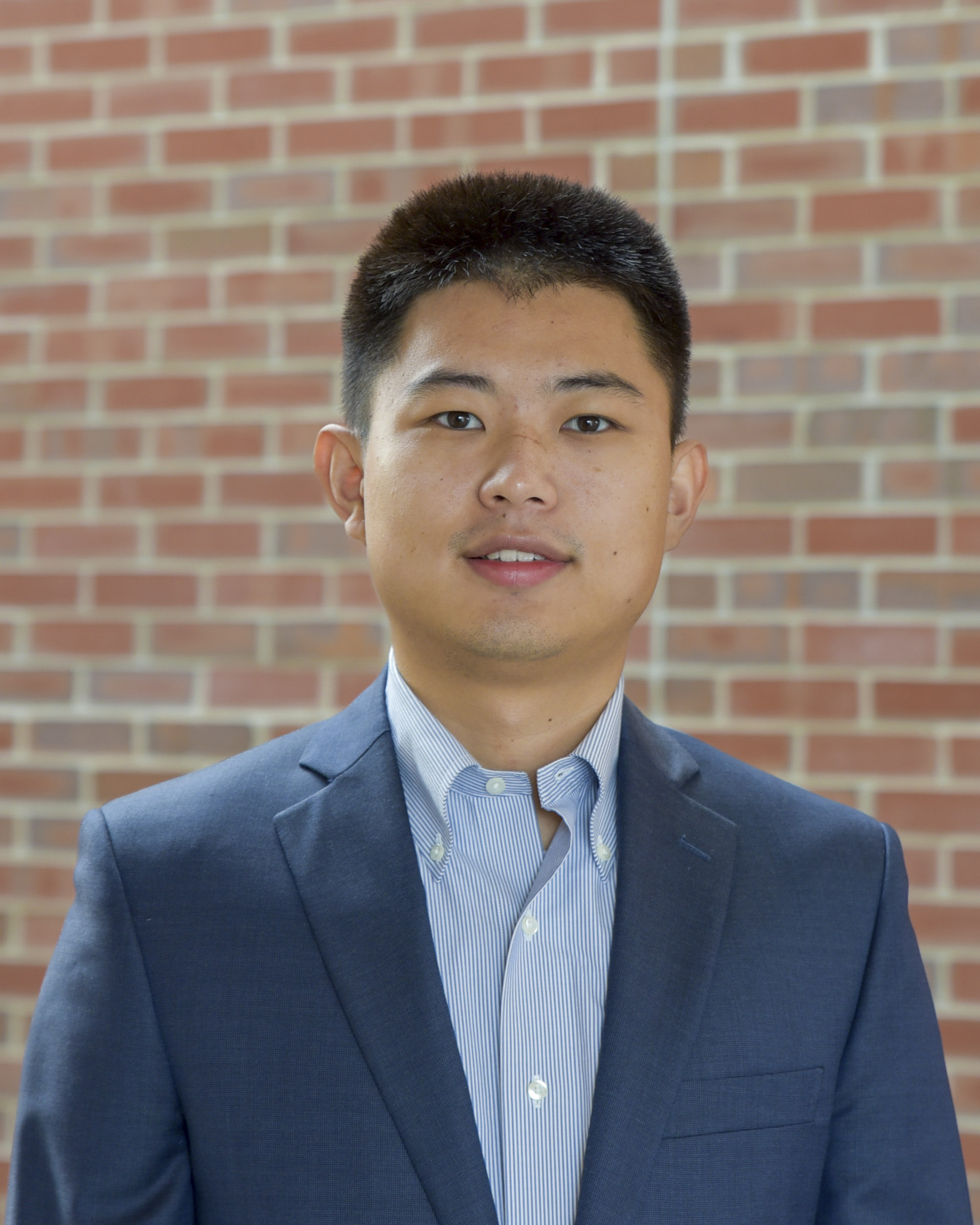
Jeffery Piao, an assistant professor in Trulaske’s School of Accountancy, looked at how AI can be used to help address “banking deserts” that have been created as the result of the closure of thousands of bank branches in the wake of the 2008 Great Recession. In areas where face-to-face lending is limited, small businesses often find barriers to obtaining the credit needed to grow their businesses.
Show Me Mizzou’s Brian Consiglio reported that Piao and his colleagues found banks with greater AI usage lent money to borrowers who were located farther away from physical bank branches. They also offered lower interest rates and saw fewer instances of default even while lending money to distant borrowers.
According to Dr. Golshan, studies like these reflect a rapid shift in the methodological frontier; accounting researchers who engage with these tools early will be well positioned to address questions that have previously been out of reach.
“The training I received at Trulaske gave me a rigorous foundation in empirical research design, archival methods, and the discipline of asking well-identified questions,” Golshan said. “The environment also exposed me to a wide range of research methods and substantive areas in accounting, which has been invaluable as my work has expanded into less conventional territory, including the intersection of psychology, AI, disclosure, corporate governance, and auditing.”
Golshan’s study, “Silent Suffering: Using Machine Learning to Measure CEO Depression,” was co-authored with Mark Cheng (PhD student at the University of Kentucky). The article was published in the Journal of Accounting Research.
“U.S. banks’ artificial intelligence and small business lending: Evidence from the Census Bureau’s annual business survey” was published by the United States Census Bureau. Philip Wang with the University of Florida and Diana Weng with Baruch College collaborated with Piao on the study.
Mizzou’s Robert J. Trulaske, Sr. College of Business prepares students for success as global citizens, business leaders, scholars, innovators and entrepreneurs by providing access to transformative technologies, offering experience-centered learning opportunities and fostering an entrepreneurial mindset.