Image


Trulaske student Isik Can earned the title of Chess Grandmaster while in his first semester at Mizzou.
When young Turkish phenom Isik Can left behind the chess tournament world to focus on academics at the age of 13, he didn’t expect to find himself back on the path to Grandmaster as a student at the Robert J. Trulaske, Sr. College of Business at the University of Missouri.
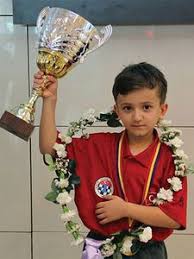
Tell us a little about your path to becoming a grandmaster.
Can: Chess has been in my life for as long as I can remember. My brother, who is seven years older than me, introduced me to the game when I was 5. He gathered me and my twin sister one day and asked if we wanted to learn. My sister passed on the opportunity, but I was immediately excited. He had always been teaching me math, and I was up for anything he threw at me. I still remember my very first encounter with the board. He just moved his knight around and took every single one of my pieces by jumping over them. I was completely mesmerized.
I did not pick it up seriously right away though. I was already busy with tennis and math, so chess stayed in the back of my mind until my family found a chess club nearby and I immediately wanted to join. From there things moved fast. In my first tournament I finished third in Istanbul under the age of 7. Two months later I was second in the Turkish Championship under 7. Then on my 7th birthday, just six months after joining the club, I became the World Champion in my age category in Iași, Romania. My family had signed me up thinking it would be a hobby to calm me down. After that, nobody thought it was just a hobby anymore.
It became serious competition from that point on until around 13, when a combination of burnout from the tournament grind and a growing pull toward academics made me step back. I genuinely thought I might leave chess behind for good.
What changed everything was discovering that chess scholarships existed at American universities. Suddenly the impossible choice I was facing, chess or academics, disappeared. Except for Mizzou, an opportunity like this almost does not exist anywhere else. I came here on a full-ride scholarship and I am deeply grateful for it every single day. I recommitted at 16 knowing exactly what I was working toward.
I came to Mizzou as an International Master and in my very first semester here I earned the Grandmaster title, becoming Türkiye's 17th GM at age 19. Mizzou turned out to be my lucky charm. In 2025 I became the Turkish National Champion and still actively represent my country in international competition today.
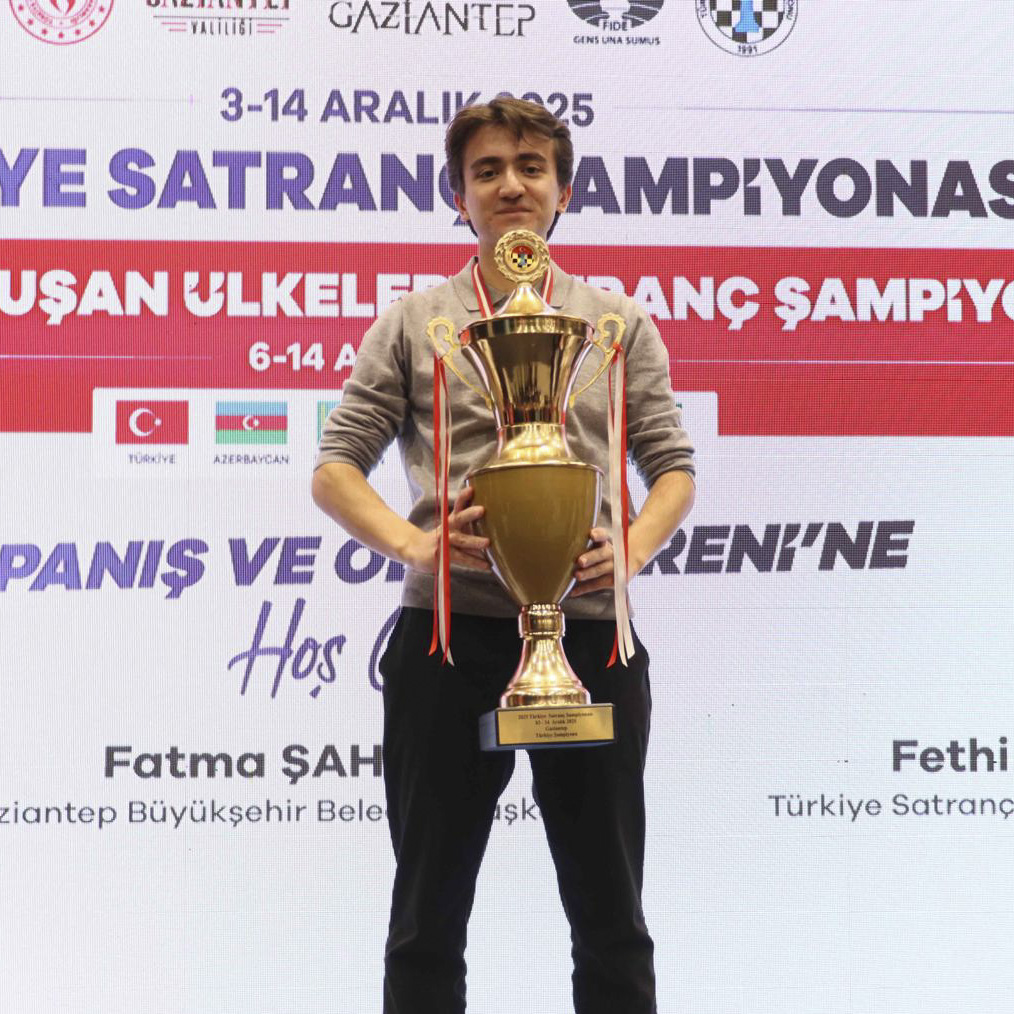
What did it mean to you to complete that title?
Can: I cannot put into words how much it meant. I failed to secure the title in the final round of a tournament seven times. Seven times I was right there, and seven times I fell short. Each one left a mark that is hard to describe. After each loss I was completely devastated. It is one thing to lose in the middle of a tournament, but to get that close to your dream, to be one game away, and then have it slip away, is a completely different kind of pain. It stays with you.
But every single time, I knew I had it in me. I was not going to let one unlucky game stop me from achieving what I had been working toward my whole life. I got back up each time, went back to work, and kept going. That belief in myself was the only thing that kept me moving forward through seven of those moments.
So when I finally did it, everything just released at once. Every sacrifice, every painful loss, every moment of doubt suddenly felt worth it. The Grandmaster title is the highest title in chess and knowing that all those years of work led to that moment is something I will carry for the rest of my life. It was the most relieving feeling I have ever experienced.
What makes chess a great activity for students pursuing business degrees?
Can: Every part of it connects to real life, and especially to finance. You have to think several moves ahead and anticipate the future. You have to study your opponent to figure out the best strategy, just like you would analyze a market or someone sitting across from you in a negotiation. You can make the best possible decision, but if you can't do it in time, you lose, and that is just as true in business.
Chess also has a deep psychological side. Professional games go three to five hours, and you are completely alone with your thoughts the whole time. You have to handle pressure when the clock is running low. You need strong pattern recognition, which is one of the most important skills in finance today. And before you even sit down, you need to have around 10,000 moves memorized. Every one of these skills carries over directly into finance and gives you a real edge. Chess doesn't just teach you to think, it teaches you to think better than the person sitting across from you.
How has your Trulaske education influenced your approach to chess — and vice versa?
Can: Trulaske pushed me to bring the same discipline I have in chess into finance. The Investment Fund Management (IFM) program has been the most formative experience. You manage real money, make real investment decisions, and stand behind real recommendations. There is no simulation. I also work as an analyst at AACE, Trulaske's student-run venture fund, where I evaluate real startups and do due diligence on live deals.
But it goes both ways. Trulaske has also sharpened my chess. I have been killing it in chess since my arrival. The way I approach rigorous class work, breaking down complex information under pressure, and staying structured when things get uncertain, has made me a more disciplined and composed player at the board. Chess and finance have started feeding each other in ways I did not expect when I first arrived.
What path led you to Mizzou?
Can: When I decided to recommit to chess alongside my academics, Mizzou had exactly what I was looking for, a chess scholarship and one of the strongest business programs in the region through Trulaske. It was the place where both sides of who I am could grow at the same time. That decision paid off more than I expected. I am now double majoring in finance and economics, participating in the Honors College, and carrying a 4.0 GPA, while still competing internationally in chess.
What are your plans after graduation?
Can: I carry two identities, Grandmaster and finance professional, and I plan to keep both. I will continue representing Türkiye in international chess for as long as I can. On the finance side, I am keeping my options open right now. I am trying to get as much real experience as possible before I decide on a specific path, from equity research in IFM to venture deals at AACE. The field is big and I want to understand it deeply before I commit to where I can add the most value. I am also considering pursuing an MBA down the road to further strengthen my foundation and open more doors in finance.
Anything else you'd like to share?
Can: Right now, life is as chaotic as it gets. IFM, a double major, Honors coursework, and an international chess calendar all at once means I have to work twice as hard as most. I also compete on Mizzou's club tennis team, which keeps me grounded. Tennis is the one place where I compete purely for the joy of it, without any professional weight attached. It reminds me that not everything has to be high stakes.
Through all of it I have learned to find balance in chaos. That is probably the most honest thing I can say about who I am: I do not wait for things to be perfect. I just find a way to perform anyway.
Mizzou’s Robert J. Trulaske, Sr. College of Business prepares students for success as global citizens, business leaders, scholars, innovators and entrepreneurs by providing access to transformative technologies, offering experience-centered learning opportunities and fostering an entrepreneurial mindset.