Image


Trulaske’s innovative AACE Venture Fund offers students real-world experience.
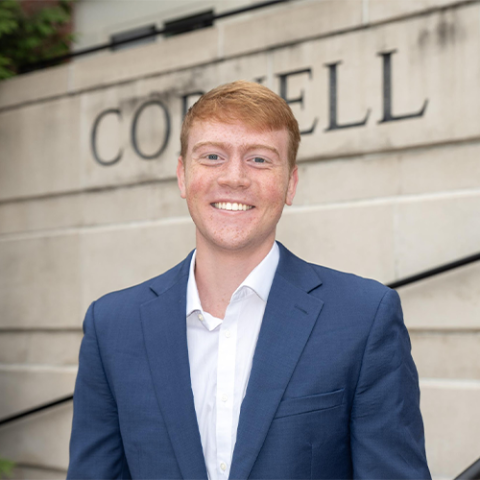
You’ll find Nathan Smith’s interests at the intersection of accounting and entrepreneurship.
Smith followed those interests from his hometown in Independence, Missouri, to the University of Missouri’s Robert J. Trulaske, Sr. College of Business, where he set out on a path to earn his MAcc through the college’s accelerated five-year Vogel Master of Accountancy program.
While Smith said the classroom instruction he received offered a strong technical foundation in financial reporting, the Trulaske student wanted to expand upon that.
“I wanted to see how those numbers translate into real-world valuation and risk assessment for startups,” Smith said. “Being part of a fund that invests real capital was the best way to bridge that gap.”
For students like Smith, the college’s unique Allen Angel Capital Education Program provides both the experience-centered learning and first-hand entrepreneurial experience they’re looking for as they work to build skills that will be relevant in the real world after graduation. The program is offered as a class through Trulaske’s Department of Finance. Applications to participate are open to students across campus.
Led by a group of student managing directors, the AACE Program administers the AACE Venture Fund. The fund has approximately $1 million in assets under management, with most of it deployed to its 18 portfolio companies. Each semester, students participating in the program invest in high-growth start-up companies by cultivating deal flow, performing pre-screening duties, completing due diligence and structuring investment contracts.
“The exposure to high-level deal flow is incredible,” said Smith, who currently serves as a student managing director for the fund. “It’s one thing to study a balance sheet in a textbook or watch a founder’s pitch on video, but it’s another thing entirely to conduct due diligence on a real company.”
Students learn the importance of “soft skills,” Smith said, like the ability to read a founder’s character and to work collaboratively with other analysts to reach a consensus. They also develop the ability to recognize a strong pitch.
“Beyond a solid revenue model and scalability, I look for a strong and resilient founder. The business we’re being pitched today is likely to change, as many early-stage companies do, but the founding team will stay largely the same. Having a team that knows how to navigate the inherent volatility of an early company is crucial,” Smith said. “A successful pitch doesn't just show the potential for a high growth curve; it demonstrates that the founders understand unit economics and have a clear, defensible strategy for competitive moats.”
Through this real-world introduction to investing, students experience first-hand the challenges, as well.
“The opportunity cost is the hardest part,” Smith noted. “We see many skilled and qualified founders with great ideas, but we have a fiduciary responsibility to allocate capital where it has the highest potential for both return and impact. Distinguishing between a ‘great product’ and a ‘great investment’ requires a lot of discipline.”
Students: Priority 1, 2, and 3
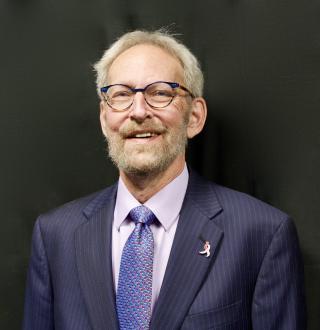
The innovative program was made possible thanks to the leadership, vision and generosity of the late William “W.D” Allen, who launched the program along with his sister, Pinney, after students suggested the idea of an investment club. W.D served as an assistant teaching professor at Trulaske and coordinator of the AACE Program.
“I was excited to support W.D in what I could tell was a passion of his,” Pinney Allen recalled. “I was in education at the time — Head of School for the Atlanta Girls’ School — and was focused on experiential learning and the power it held. This was the ultimate in learning through experience. It was a terribly exciting project.”
W.D’s wife, Mellodie Wilson, thinks of AACE as her husband’s “baby.” W.D led AACE from its inception in 2010 until poor health forced him to retire in May 2024. Though he had hoped to stay on as an AACE advisor and maintain regular office hours after his retirement, deteriorating health stood in his way.
“W.D was committed to his students,” Pinney Allen said. “I so admire him for that. Students were priority 1, 2 and 3. He worked for them with every fiber of his being.”
W.D passed away in September 2024, but his legacy lives on through the unique learning opportunity he created for Smith and countless other students who found their start in finance by participating in the AACE Program. Recent AACE students have secured jobs at Union Square Advisors in San Francisco, Goldman Sachs in New York City and Raymond James in Chicago.
Philip Jurgensmeyer, MAcc ’19, participated in the program from 2016-19, serving as president and director in his final year and working closely with W.D.
“W.D gave us a level of ownership that’s rare at the undergraduate level. We weren’t just studying investment theory — we were sourcing companies, conducting diligence, and making real decisions,” Jurgensmeyer said. “It was an environment that demanded both analytical rigor and sound judgment.”
Now an investor at Advent, a global private equity investor, Jurgensmeyer credits the AACE Program and Allen’s mentorship for bridging the gap between classroom learning and real experience, providing him with a strong foundation as he entered the world of private equity.
“AACE was among the most formative experiences I had at Mizzou,” Jurgensmeyer said. “It shaped how I think as an investor and how I approach decisions more broadly. When I entered private equity, I already had a strong foundation — not just in financial analysis, but in how to collaborate, think independently, and manage real-world ambiguity. Those lessons have stayed with me throughout my career.”
Balaji Rajagopalan, Robert J. Trulaske, Sr. Dean of the Trulaske College of Business, said the program reflects the college’s commitment to providing students with a real-world context beyond the classroom.
“Programs like AACE help ensure our students have the kind of skills and first-hand experience they’ll need to succeed in the workforce after graduation,” Rajagopalan said. “We will forever be grateful to W.D and his family for making this experiential investment program possible.”

Nique Fajors, Trulaske director of the Center for Entrepreneurship and Innovation and assistant teaching professor, serves as advisor for AACE. Fajors has been impressed by the quality of discussion and problem solving that students bring to the AACE classroom.
“Every student selected for the AACE Program is exceptional,” Fajors said. “The program is open to all Mizzou students, so not only do we have the best and brightest minds from Trulaske, but also from across campus.”
Through his participation in the AACE Program, Smith was able to hone his interests, zeroing in on roles that allow him to help businesses scale and navigate complex financial transitions. Smith has a KPMG Audit internship lined up for summer 2026 and plans to intern with the PwC Deals team in New York in summer 2027. After graduation, he hopes to build a career in the financial services industry, specializing in Mergers and Acquisitions.
“Trulaske students are known for being hardworking and technical, but programs like AACE give us ‘reps’ in high-stakes environments,” Smith said. “It moves us from being passive learners to active decision-makers. Having real money to invest and ‘skin in the game’ forces a level of rigor that you simply can't replicate in a standard lecture hall.”
Though AACE had an inauspicious start — W.D and a handful of students meeting in his office — it quickly morphed into a for-credit class and became a launching point for successful careers. It also created an enduring sense of community among its participants, many of whom gathered for a 15-year reunion in January at The Heidelberg.
Wilson said her husband wanted his students to have the opportunities to take risks in a safe environment and to learn from their mistakes.
“As he often said, ‘You learn more from your mistakes than you do your successes.’ He encouraged students to try new things without fear of screwing up. He was never one to harshly criticize or chastise students for making mistakes or bad decisions,” Wilson said. “Above all, he wanted his students to also embody kindness, humility and personal responsibility for their decisions and actions. He just didn’t want them to lose sight of the fact that you can still be a good person and an astute investor.”
While reflecting on the program during his retirement celebration in April 2024, the late W.D said that ultimately, it was the passion and drive of students like Smith that made the AACE what it is today.
“My plan all along was to give you guys the opportunity to take responsibility, to build some courage—or a spine,” W.D. Allen said. “I couldn’t have asked for it to turn out any better.”
Mizzou’s Robert J. Trulaske, Sr. College of Business prepares students for success as global citizens, business leaders, scholars, innovators and entrepreneurs by providing access to transformative technologies, offering experience-centered learning opportunities and fostering an entrepreneurial mindset.