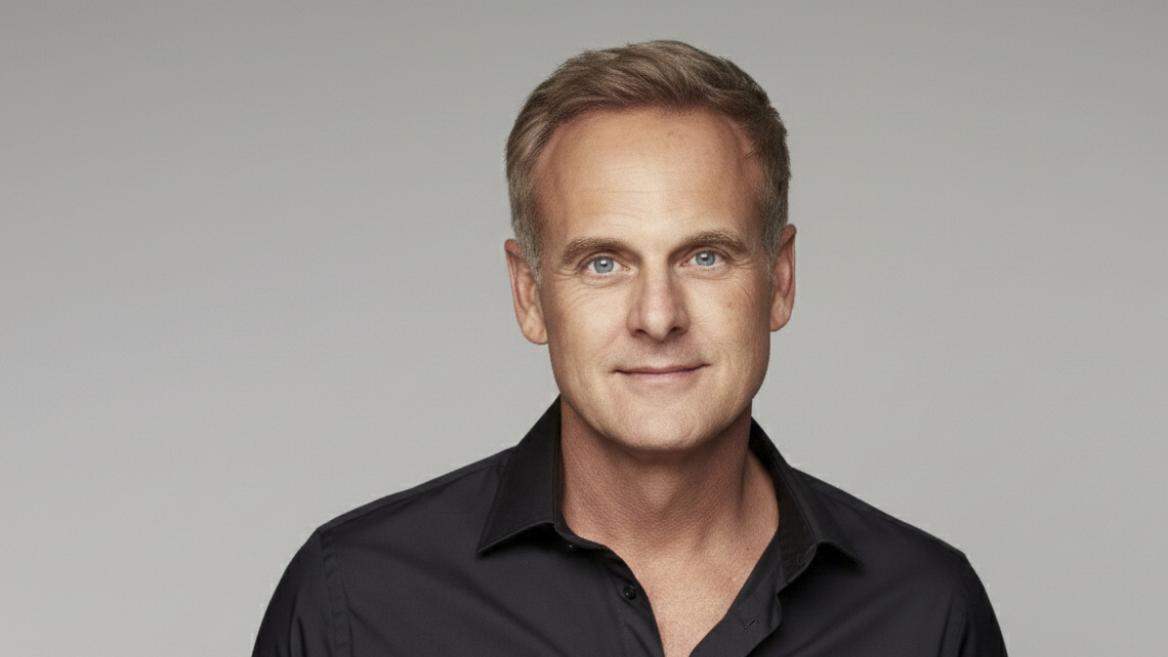
Meet Hayes Barnard, honorary Doctor of Humane Letters, Honoris Causa degree recipient, from the Robert J. Trulaske, Sr. College of Business
What excites you about the work you’re doing?
I get to wake up every day and build things with incredibly talented people. That's the real answer. I learned a long time ago that the best thing I can do as a leader is surround myself with smart, passionate people. The team we've built at GoodLeap is the best I've ever worked with, and right now we're in the middle of one of the most exciting moments in the history of technology. AI is changing everything. It’s changing how homeowners think about tackling new projects. It’s changing how contractors source and manage jobs. And these changes are happening at light speed. We're not watching it happen, we're building it. Every day there's a new problem to solve, a new way to make sustainable living more accessible, and the people around me are the ones making that possible. When you combine world-class talent with a mission that actually matters, you get innovation that moves fast and means something. That's what gets me out of bed.
Being a “visionary” requires seeing what others can’t yet see. How do you stick to your vision? And how do you convince others to get involved?
I just believe there's always a better way. That's it. Every system, every process, every industry, there's a better version of it waiting to be built. And once you see that, you can't unsee it. So you just keep going. You stay relentless. The difference between rejection and results is just how long you stick with it. People have told me a lot of things couldn't be done in my life. I just kept showing up. My mom worked three jobs and never lost her joy. That's the standard. You don't quit because it's hard. You keep pushing because you believe there's a better way and you're not willing to settle for how things are. As for getting others involved, I've found that when you're relentless about something real, people want in. You don't have to sell purpose. You just have to live it, and the right people show up.
Your work reflects a commitment to social entrepreneurship, a business approach that focuses on developing solutions to environmental, social or cultural problems. What do you wish more people knew about social entrepreneurship?
I wish people understood that doing good and making money are not mutually exclusive. For a long time, the narrative was you pick one. That's a false choice, a limited mindset. The most interesting companies being built right now are the ones that figured out how to do both at scale. Building GoodLeap and GivePower together took that mentality to the next level. When you stand in a village and watch a mother give her child clean water for the first time, when you see the look on her face, something shifts inside you that never shifts back. That's not a business case. That's something deeper. GivePower showed me that business can be a vessel for something sacred. Every transaction on GoodLeap's platform funds that work, not through galas or grant cycles, but through the everyday act of a homeowner choosing to live more sustainably. There's something beautiful about that.
What does it mean to you to return to your alma mater to present the commencement keynote address and receive an honorary degree?
This one's personal. I was a kid who failed the first grade. I had dyslexia and dysgraphia, and for a long time, people thought I wasn’t talented enough to attend a University like Mizzou. I carried that weight for years. When I walked across the stage to get my degree from Mizzou, my mom screamed from the top of her lungs, "It's a miracle!" and she meant it. To her, a kid like me finishing college was a miracle. So to come back now, to stand on that same stage and receive an honorary degree, is special. I think about the version of me who sat in those seats, the kid with the chip on his shoulder on a mission to prove himself and didn't know what was ahead. If I can show one student in that audience that where you start doesn't determine where you end up, that your adversity can become your greatest advantage, then this whole trip will have been worth it. Mizzou believed in me when I wasn't sure I believed in myself. That's not something you forget.
How did your Missouri roots shape your path?
Everything goes back to Missouri. I grew up in Creve Coeur, outside St. Louis. My mom raised me on her own in an apartment. My dad left when I was three. So I saw what hustle looked like early. My mom would load her trunk full of law books and sell them door-to-door, then sell clothes at night, substitute teach during the week, and do neighbors' yards on the weekends. All of it with a smile. Never complained. Never took a sick day. I had a gym teacher at River Bend Elementary named Ron Edwards who supported me through Elementary school. He saw a kid who was struggling and he didn't write me off. He took me to meet football players, gave me something to believe in. My High School Principal, Bill Myer, wrote a personal letter and made calls to help get me accepted to the University of Missouri. That mattered more than he probably ever knew. And my closest friends from back home, both Mizzou Tigers, are still right there with me. They're the leaders helping run GoodLeap every day. We came up together, went to school together, and we never stopped building together. If that doesn't tell you something about the people this place produces, I don't know what does. Missouri gave us grit, loyalty, and the understanding that you show up for the people beside you. That's the foundation of everything we've built.
How is your definition of success different now than it was on your own graduation day?
On graduation day, success meant proving to people I could become successful. Success was about showing the world that the kid who struggled in school could make it. It was external. It was about the financial scoreboard. So I could give my wife the life my Mother never had and my son and daughters the life I never had. Today, success is knowing your purpose and living it every single day. The only thing I feel like I've truly nailed in my life is that I know my mission and my purpose. That clarity is worth more than anything on a balance sheet. Success to me now is watching a community in Colombia turn on a solar water farm for the first time. It's watching a team of extraordinary employees build something that's never been done before to make a positive impact in the world. It's my kids seeing that business can be a force for good in the world. The scoreboard doesn't matter if you don't know why you're playing the game.
How did the Trulaske College of Business prepare you for success?
Trulaske gave me something more important than any textbook lesson, it gave me confidence that I belonged. For a kid with learning disabilities, learning how to execute at the highest level of academics, being in a place that challenged me and supported me at the same time was transformative. The management and marketing program taught me how to communicate, how to think about building something, and how to bring people along with you. Those are the skills I've used every single day since. But Trulaske also taught me something I didn't fully appreciate at the time, how to learn from the people around me. The power of surrounding myself with really smart people and celebrate their talent instead of trying to do everything on my own. That started at Mizzou. The collaborative, grounded culture of the business school, people who worked hard and helped each other, that became the blueprint for how I've built every company since. I wouldn't trade that foundation for anything.
Anything else you’d like to share?
I'd say this to every graduate walking across that stage: find your purpose. Not your plan, your purpose. Plans change. Industries change. The economy changes. But when you know why you're here, you become unstoppable. And don't try to solve everything at once. Just pick one person. One problem. Start there. The biggest things I've ever been a part of started with one conversation or one question that wouldn't leave me alone. You don't need a master plan. You need a starting point and the willingness to keep going.
As an entrepreneur, business owner and philanthropist, Hayes Barnard has dedicated his life and career to innovation, service and the belief that business can be a powerful force for good.
Barnard is the founder, chair and CEO of GoodLeap, the largest financial technology company in the U.S. focused on home improvement. GoodLeap’s proprietary software and financing tools have helped more than 200,000 contractors and manufacturers offer a broad suite of solar panels, battery storage, efficient roofing and other sustainable solutions to millions of homeowners across the country. GoodLeap has been ranked No. 30 on Fast Company’s Most Innovative Companies in the World list and No. 10 on Forbes’ Fintech 50 list.
Barnard is also the founder, chair and CEO of GivePower, an award-winning nonprofit that provides clean electricity and safe drinking water to more than 2 million people across 32 countries by partnering with hundreds of companies.
In 2020, Barnard founded GoodFinch, an asset management company specializing in sustainable investments. Mirroring his previous successes, the company has since become the largest finance platform for solar and home improvement assets.
Barnard graduated from the Robert J. Trulaske, Sr. College of Business with a bachelor’s degree in business administration in 1995.
Barnard and his wife, Jessica, have three children and reside in Austin, Texas.
Mizzou’s Robert J. Trulaske, Sr. College of Business prepares students for success as global citizens, business leaders, scholars, innovators and entrepreneurs by providing access to transformative technologies, offering experience-centered learning opportunities and fostering an entrepreneurial mindset.