What should future accountants know about AI? An EY leader answers Mizzou students' questions

Artificial intelligence is changing how accountants work, but what does that mean for students preparing to enter the profession?
Following his keynote presentation at the 2026 Richard M. Orin Ethics Symposium at the University of Missouri's Robert J. Trulaske, Sr. College of Business, Rick Clark, an assurance partner and Assurance AI champion at EY, answered questions about the future of accounting, the skills employers will value and the ethical challenges of emerging technology.
Here are highlights from the conversation, edited for length and clarity.
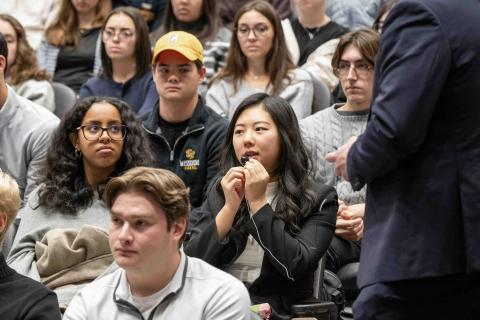
How will AI change entry-level accounting positions?
Clark: AI will increasingly handle tasks traditionally assigned to entry-level accountants, including preparing workpapers and performing initial reviews. That doesn't mean new professionals won't be needed, but their responsibilities will change.
Instead of spending their early careers primarily preparing work for someone else to review, new accountants may move into reviewing and interpreting work much sooner.
That creates a challenge: How do you become an effective reviewer if you haven't spent years learning through the preparation process?
EY is exploring that question through a new residency program that extends the traditional internship experience. Students will have opportunities to work with emerging technologies and develop practical skills while they're still in school.
The profession can't continue preparing new accountants exactly as it has for decades when the work they'll be doing is changing so dramatically.
What's the most important thing students can do now to prepare for an AI-driven workplace?
Clark: Start using the technology.
The accounting profession is still in the early stages of figuring out how AI will be integrated into everyday work. Students have an opportunity to become comfortable with these tools as the profession evolves.
But simply knowing how to generate an answer isn't enough. The most important skill is learning how to determine whether that answer is accurate.
AI can produce impressive results, but it also makes mistakes. Students should practice validating its outputs, checking sources and recognizing when something doesn't make sense.
The goal is to develop both technological fluency and the professional skepticism needed to use AI responsibly.
How should universities incorporate AI into accounting education?
Clark: Universities need to strike a balance between giving students access to AI and preserving the learning process that develops critical thinking.
Learning isn't just about arriving at the correct answer. It's about understanding how to approach a problem, evaluate information and reach a conclusion.
If students rely on AI to do all that work, they risk missing the opportunity to develop those skills.
At the same time, prohibiting AI entirely isn't a realistic solution. Employers are adopting these technologies, and graduates need experience using them appropriately.
The challenge for educators is to integrate AI in ways that strengthen learning rather than replace it.
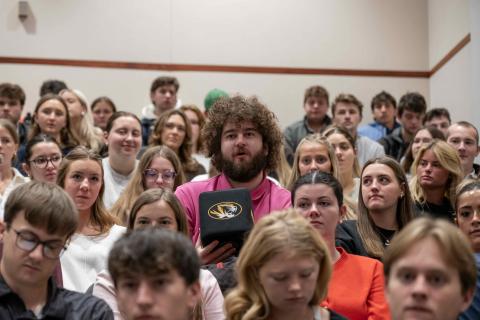
Will AI eventually face more government regulation and oversight?
Clark: That's certainly possible.
Today, much of the work organizations are doing to establish responsible AI practices is voluntary. Companies are developing their own policies, controls and oversight procedures, but there isn't one comprehensive set of requirements governing every application.
Historically, major changes in financial reporting oversight have sometimes followed significant failures that exposed weaknesses in existing systems.
AI could follow a similar path. If serious problems emerge, regulators may decide that more formal requirements are necessary.
That could create additional opportunities for accounting professionals to independently evaluate AI systems and help organizations demonstrate that their controls are working.
How can accountants maintain professional judgment when AI produces work they don't fully understand?
Clark: This is an important challenge, but it isn't entirely new.
Even before AI, professionals sometimes reviewed work without fully understanding how it was prepared. They might follow the same procedures used in previous years without questioning why those procedures were appropriate.
AI makes that risk more significant because the technology can produce sophisticated results very quickly.
Accountants need to remain curious, ask questions and understand the reasoning behind the information they're reviewing.
A reviewer who simply approves an AI-generated result without understanding it isn't providing meaningful oversight.
Organizations also need to establish clear expectations for how employees review, challenge and validate AI-generated work.
What happens when both companies and their auditors increasingly rely on AI?
Clark: AI introduces new risks, but that doesn't mean traditional processes were free from errors.
Human preparers make mistakes, which is why accounting and auditing processes have historically included multiple levels of review.
As organizations automate more work, they'll need to reconsider where those safeguards belong.
For example, instead of having a person review every transaction or reconciliation prepared by AI, a company might place greater emphasis on the controls surrounding the system itself — how it was designed, trained, tested and monitored.
That shift isn't necessarily simpler. Replacing one human review control could require several new controls to ensure the technology operates reliably.
The challenge is determining whether the benefits of automation justify the additional risks and oversight responsibilities.
**
The Richard M. Orin Ethics Symposium has challenged Mizzou students to think critically about ethical decision-making in business for nearly 25 years. As emerging technologies reshape the accounting profession, that mission remains as relevant as ever.